How Divorce Affects Different People
No two people experience divorce in exactly the same way. Emotional reactions can be influenced by whether someone initiated the divorce, how suddenly the marriage ended, their financial circumstances, their support system, and whether children are involved.
Gender may also shape how some people seek support or express grief, but individual experiences vary widely. The stages of divorce should never be treated as a rigid formula for how women, men, children, or either spouse are expected to feel.
Factors That Can Shape the Divorce Experience
How someone responds to divorce often depends more on their circumstances than on any single demographic characteristic.
Who Initiated the Divorce
The initiating spouse may begin grieving before the legal case starts, while the other spouse may experience the news as a sudden shock.
Financial Stability
Concerns about housing, income, support, debt, and retirement can intensify uncertainty during the emotional stages.
Children and Co-Parenting
Parents may be processing their own grief while helping children adjust and establishing new family routines.
Support System
Trusted friends, family members, counselors, support groups, and legal professionals can make the transition feel less isolating.
The Stages of Divorce for Women
Women may experience any combination of shock, anger, bargaining, sadness, and acceptance. Some may also face practical concerns involving household income, caregiving responsibilities, health insurance, retirement savings, or returning to the workforce.
At the same time, many women enter divorce with strong professional identities, independent finances, and established support networks. There is no single emotional pattern that applies to every woman. The most helpful approach is to focus on the individual’s circumstances rather than assume that gender determines the experience.
Practical Focus
Understanding household finances, credit, property, insurance, support, and retirement accounts can provide greater confidence and independence during the divorce process.
The Stages of Divorce for Men
Men experience the same broad range of grief responses, although some may feel pressure to hide sadness, fear, or loneliness. Anger, withdrawal, overworking, or avoiding conversations about the divorce can sometimes mask deeper feelings of loss.
Divorce may also affect a man’s daily relationship with his children, living arrangements, social connections, and sense of identity. Creating a dependable support system and addressing emotions directly can make the adjustment healthier and more manageable.
Practical Focus
Maintaining meaningful friendships, staying actively involved in children’s lives, and seeking support when needed can reduce isolation during and after divorce.
How Children Experience Divorce
Children may also grieve the changes that accompany divorce, but they do not necessarily experience the same stages as adults. Their reactions often depend on age, personality, family conflict, changes in routine, and how parents communicate with them.
Younger children may worry about where they will live or whether they caused the divorce. School-age children may experience sadness, anger, divided loyalty, or difficulty concentrating. Teenagers may become withdrawn, more independent, or openly frustrated with one or both parents.
Supporting Children at Different Ages
Children need age-appropriate information, reassurance, and permission to maintain healthy relationships with both parents whenever it is safe to do so.
Young Children
Use simple explanations, repeat that the divorce is not their fault, and maintain predictable routines.
School-Age Children
Encourage questions, acknowledge difficult emotions, and keep teachers informed when additional support may be helpful.
Teenagers
Respect their growing independence while maintaining boundaries, open communication, and consistent parental involvement.
Keep Children Out of Adult Conflict
Avoid asking children to carry messages, choose sides, gather information, or provide emotional support to a parent. Children should be allowed to love both parents without feeling responsible for the divorce.
The Spouse Who Initiated the Divorce
The spouse who initiates divorce may appear to move through the emotional stages more quickly because they may have been considering the decision for months or even years before discussing it openly.
Initiating the divorce does not mean that person feels no grief. They may experience guilt, uncertainty, sadness, fear of regret, or concern about how the decision will affect children and extended family. Relief and grief can also exist at the same time.
Remember
Being emotionally further along does not mean the other spouse should be expected to adjust immediately. Patience, clear boundaries, and respectful communication can reduce unnecessary conflict.
The Spouse Who Did Not Expect the Divorce
A spouse who did not anticipate the divorce may enter the process in shock while the initiating spouse has already spent considerable time thinking about the decision. This difference in emotional timing can make conversations and negotiations especially difficult.
The surprised spouse may need time to understand what is happening, obtain legal information, gather financial records, and develop a support system. Although some decisions require prompt attention, not every issue must be solved immediately.
Remember
Feeling unprepared does not mean you are powerless. Learning about your legal rights, finances, and available support can help restore a sense of stability and control.
The Emotional Timelines May Not Match
One spouse may be approaching acceptance while the other is still experiencing shock, anger, or bargaining. Recognizing that difference can help explain why communication feels difficult and why neutral professionals, structured negotiation, or mediation may be useful.
Coping With the Emotional Stages of Divorce
Healthy coping does not require you to ignore grief or remain positive at every moment. It means creating enough stability to process difficult emotions while continuing to care for your health, responsibilities, children, and future.
The strategies that help most may change as you move through the emotional and legal stages. During shock, you may need information and immediate support. During anger, you may need healthy boundaries. During sadness, maintaining connection and daily routines may become especially important.
Building a Healthy Divorce Support Plan
Divorce affects emotional health, family life, finances, and legal rights. Building support in each area can make the transition more manageable.
Emotional Support
Identify trusted people who can listen without escalating conflict or pressuring you to make decisions.
Professional Support
A counselor, therapist, financial professional, mediator, or attorney can provide guidance within their area of expertise.
Daily Stability
Regular sleep, meals, movement, work, parenting routines, and time outdoors can provide structure during uncertainty.
Reliable Information
Learn about the divorce process from trustworthy sources rather than relying on assumptions, social media, or another person’s case.
Focus on What You Can Control
You may not be able to control your former spouse’s decisions, the court’s schedule, or every emotion that arises. You can control how you communicate, which professionals you consult, how you care for yourself, and whether your choices support your long-term goals.
Avoid Making Major Decisions in the Heat of Emotion
Anger, fear, guilt, and exhaustion can affect judgment. Before agreeing to significant financial, parenting, or property terms, take time to understand the consequences and obtain appropriate professional guidance.
Create Boundaries Around Communication
When direct communication repeatedly turns into conflict, consider using written communication, scheduled conversations, a parenting application, attorneys, or a mediator. Clear boundaries can help separate legal and parenting discussions from unresolved marital arguments.
Take the Process One Step at a Time
Divorce can feel overwhelming when viewed as one enormous problem. Breaking it into smaller tasks—gathering one set of documents, preparing one budget, or addressing one parenting issue—can make the process feel more manageable.
When Additional Support May Be Helpful
Consider speaking with a licensed mental health professional if difficult emotions consistently interfere with sleep, work, parenting, relationships, or your ability to care for yourself. Legal professionals can explain the divorce process, but emotional and mental health concerns should be addressed by an appropriately qualified provider.
Remember
Moving forward does not require you to feel fully healed before taking the next practical step. Emotional progress and legal progress often occur at different speeds, and both can happen gradually.
Frequently Asked Questions About the Stages of Divorce
The following answers address common questions about the emotional and legal stages of divorce. Because divorce laws and procedures vary, legal information should be treated as a general overview rather than advice for a specific case.
What are the five emotional stages of divorce?
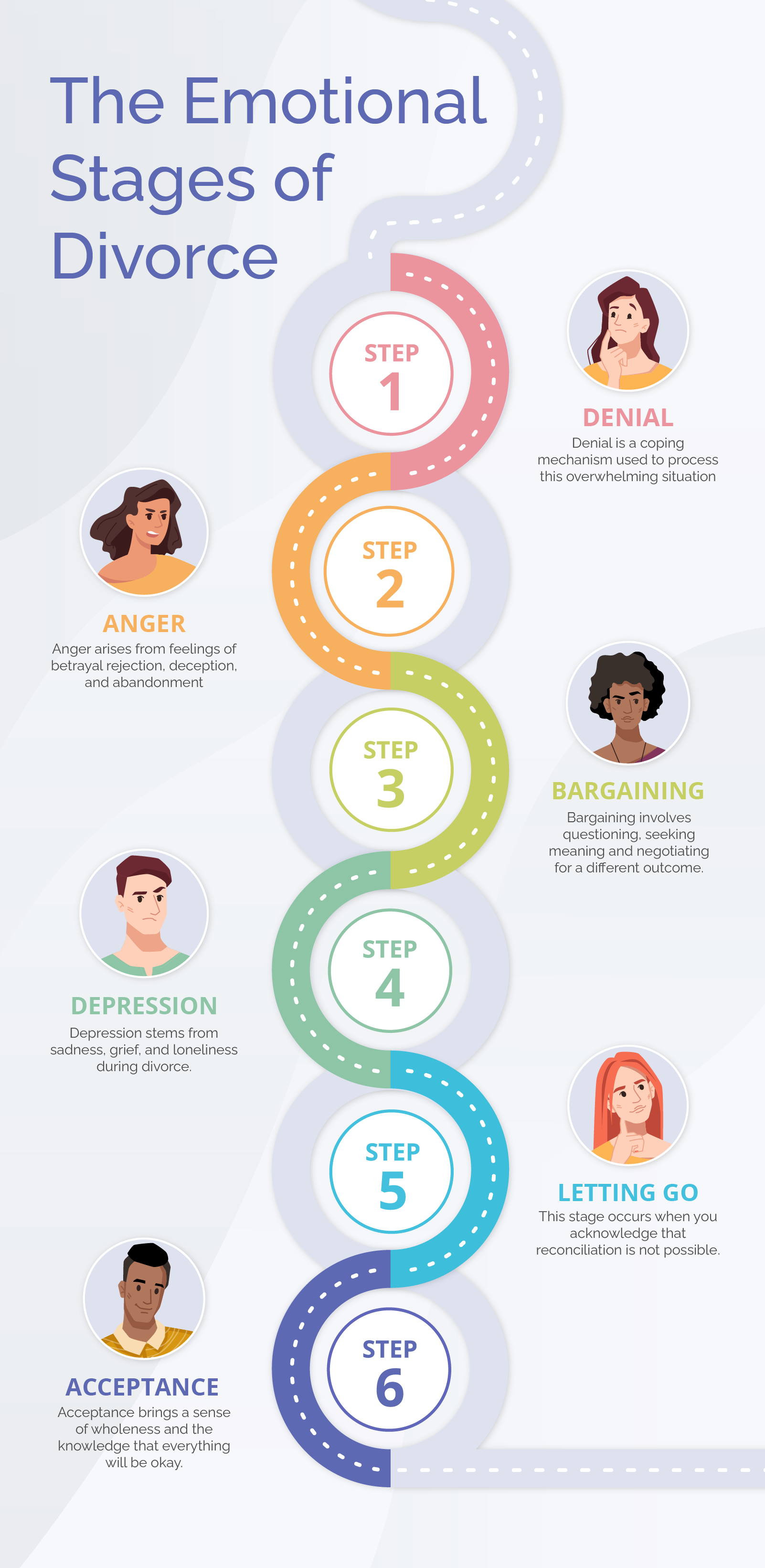
The five commonly recognized emotional stages are shock and denial, anger, bargaining, depression, and acceptance. They provide a framework for understanding grief but do not predict exactly how every person will experience divorce.
Do the stages of divorce happen in order?
Not usually. People may skip a stage, experience several emotions at once, or return to anger, bargaining, or sadness after periods of acceptance. Emotional healing is rarely linear.
How long do the emotional stages of divorce last?
There is no universal timeline. Healing may take months or longer and can be affected by the length of the marriage, conflict, children, financial stress, whether the divorce was expected, and the support available.
What are the legal stages of divorce?
The legal process generally includes filing and service, temporary arrangements when needed, financial disclosures and discovery, negotiation or mediation, trial or final resolution, and entry of a final divorce judgment. The exact steps vary by state and case.
Is the divorce process different for women and men?
The legal process does not generally assign different steps based on gender. Emotional and practical experiences may differ depending on finances, caregiving, parenting, support systems, and individual circumstances, but no single pattern applies to every woman or man.
Does the spouse who initiates divorce heal faster?
The initiating spouse may appear further along because they may have started processing the end of the marriage before discussing divorce. They can still experience grief, guilt, uncertainty, and fear even when the decision was theirs.
How can parents help children cope with divorce?
Parents can provide age-appropriate explanations, reassure children that the divorce is not their fault, maintain reliable routines, avoid exposing them to adult conflict, and support healthy relationships with both parents whenever it is safe.
Can the legal divorce be finished before emotional healing is complete?
Yes. A court can legally finalize a divorce while one or both spouses are still processing grief. Emotional healing often continues after the final decree and may be affected by later milestones, parenting issues, or financial changes.
Moving Forward Through the Stages of Divorce
Divorce involves more than one path. The emotional stages describe the grief, adjustment, and healing many people experience, while the legal stages create the framework for formally ending the marriage and resolving practical issues.
Neither journey will look exactly the same for every family. You may move quickly through one legal stage while remaining in the same emotional stage for months. You may also revisit difficult feelings after believing you had already reached acceptance.
The Bottom Line
There is no perfect way to move through divorce. Understanding your emotions, learning what to expect legally, building a dependable support system, and making decisions with your long-term future in mind can help create a more manageable path forward.