
What is child custody in Georgia? In Georgia, child custody is divided into legal custody (decision-making authority) and physical custody (where the child lives). Both types can be sole or shared depending on the child’s best interests.
What is the difference between legal and physical custody in Georgia?
Legal custody refers to the authority to make major decisions about a child’s education, healthcare, and upbringing. Physical custody determines where the child lives. Courts may award either type as sole or joint custody.
Learn more: Parenting Plans in Georgia: What Parents Need to Know
Is Georgia a 50/50 custody state?
No. Georgia does not automatically award equal parenting time. Courts focus on the best interests of the child, which may result in equal parenting time—but not always.
What is a parenting plan in Georgia and do I need one?
Yes. A parenting plan is required in Georgia. It outlines parenting time, schedules, and decision-making responsibilities. A temporary parenting plan may be used during the case and often influences the final order.
How do Georgia courts decide custody?
Courts evaluate the best interests of the child by considering factors such as each parent’s relationship with the child, stability, work schedules, and the child’s needs. Older children may also express a preference.
Learn more: Georgia Child Custody Laws and Factors
Can a judge limit a parent’s visitation in Georgia?
Yes. A judge may restrict or supervise visitation if necessary to protect the child, including cases involving substance abuse, domestic violence, or unsafe living conditions.
You can find protective orders and family violence resources on the Georgia Superior Court Clerk’s website.
Can a child choose which parent to live with in Georgia?
It depends on the child’s age. Children 14 or older can generally choose which parent to live with unless it’s not in their best interests. Children ages 11–13 can express a preference, but the court makes the final decision.
What is parental alienation and what can I do in Georgia?
Parental alienation is when one parent tries to damage or interfere with the child’s relationship with the other parent and includes preventing communication, speaking negatively about the other parent, and encouraging the child to disregard the other parent. Avoid parental alienation by being consistent and focusing on your child. Courts can intervene if needed.
Learn more: Custody Battle Blunders: Top 10 Mistakes to Avoid
What happens if a parent violates a parenting plan in Georgia?
Parenting plans are court orders. Violations may result in a contempt action, makeup parenting time, required classes, or modifications to the order.
Can custody be modified later in Georgia?
Yes. Custody can be modified if there is a material change in circumstances, such as relocation or changes in a parent’s ability to care for the child.
How does relocation affect custody in Georgia?
Relocation can impact custody and parenting time. Courts consider the reason for the move and how it affects the child’s relationship with both parents.
Learn more: Relocation “Move-Away” Cases in Georgia
What is divorce in Georgia? Georgia is a no-fault divorce state, meaning a divorce can be granted based on an “irretrievably broken” marriage. There is a minimum 31-day waiting period after filing and service before a divorce can be finalized.
Can I file for divorce in Georgia?
Yes, if at least one spouse has lived in Georgia for at least six months before filing.
How do I file for divorce in Georgia?
You begin by filing a Complaint for Divorce in the Superior Court of the county where your spouse lives. If your spouse lives out of state, you may file in your county. You can find Georgia divorce forms and filing instructions on the Judicial Council of Georgia’s website.
Find your local Georgia Superior Court to learn where to file.
Is Georgia a no-fault state?
Yes. Georgia allows no-fault divorce based on an “irretrievably broken” marriage. This means neither spouse is required to prove wrongdoing.
Learn more: No-Fault Divorce in Georgia: What You Need to Know Before You File
How long does divorce take in Georgia?
It depends. There is a mandatory waiting period, but uncontested divorces are typically faster than contested cases involving disputes over custody, finances, or property.
What is legal separation vs divorce in Georgia?
Divorce ends a marriage. Legal separation (called separate maintenance in Georgia) allows spouses to live apart while remaining legally married, with court orders for finances and custody.
Learn more: Understanding Legal Separation (Separate Maintenance) in Georgia
How is property divided in Georgia?
Georgia equitable distribution laws divide property fairly and not necessarily equally.
Learn more: Property Division In Georgia: Equitable Distribution Explained
How are debts handled in a Georgia divorce?
Debts are also divided equitably based on fairness, including who incurred the debt and each spouse’s ability to pay.
Will I have to pay alimony, or will I receive alimony in Georgia?
It depends. Georgia courts look at how long you were married, the standard of living, each spouse’s income and needs, and how much each spouse contributed to the marriage. Also, although Georgia is a no-fault state, as grounds to end the marriage and get a divorce, alimony is a separate issue, and fault can be considered when awarding alimony.
What happens if my spouse won’t agree to the divorce in Georgia?
Your spouse cannot stop the divorce, but can delay the process. A court can still finalize the divorce if one spouse proves the marriage is irretrievably broken.
How much does a divorce lawyer cost in Georgia?
Costs vary depending on complexity, conflict, and whether issues like custody or financial disputes require litigation.
Calculator: Georgia Attorney Fees
What is family law in Georgia? Family law in Georgia covers legal issues involving marriage, children, or home life, and common cases include divorce, annulments, child support, and child custody to define the rights and responsibilities of those concerned.
What does family law include in Georgia?
In Georgia, family law deals with matters affecting your household, like divorce, child custody, child support, paternity, alimony, property division, post-divorce changes, adoption, domestic violence, and protective orders.
Learn more: Georgia Family Law Resources and Court Information
Does Georgia recognize common law marriage?
Georgia recognizes common law marriages that were made before January 1, 1997, or created in a different state that permits common law marriage. If you lived with your significant other before this date, Georgia does not consider you “married” under state law.
What is an annulment (declaration of invalidity) in Georgia?
An annulment is a court order stating your marriage is invalid, usually because of fraud, bigamy, or one spouse not being of legal age to consent to the marriage. If granted, the marriage is legally erased, as if it never happened. It’s different than a divorce, which legally ends a valid marriage.
What is paternity and why does it matter in Georgia?
Paternity establishes who a child’s father is and is important to determine the rights of parents when dealing with things like child support, child custody, visitation, inheritance, and making major decisions involving the child. You can establish paternity in Georgia through the Georgia Department of Human Services.
Learn more: Paternity in Georgia: Establishing Legal Fatherhood
Can unmarried parents get a parenting plan in Georgia?
Yes, and it’s common for parents who were never married to get a parenting plan to lay out custody arrangements, holidays, visitation, and how decisions about other important matters involving the child will be made.
Learn more: Parenting Plan in Georgia: What Parents Need to Know
What is child relocation law in Georgia?
Child relocation in Geogia happens when one parents wants to move and the move would have a major impact on the custody or visitation arrangement. In Georgia, courts consider things like each parent’s ability to continue a strong relationship with the child, school, activities, and other family support when deciding if the move is in the child’s best interests.
How long do I have to object to a relocation notice in Georgia?
The deadline to object to a relocation notice is typically included in your original court order and varies by case. If you receive a relocation notice, acting quickly and speaking to a family law attorney immediately is crucial so you don’t miss the deadline and lose your right to respond.
Learn more: Relocation “Move-Away” Cases in Georgia
Can court orders be changed after divorce in Georgia?
Yes. If there is a significant change in circumstances, a divorce decree can be changed later to address things like child custody, child support, parenting time, and sometimes, alimony. This often occurs because of major changes involving a move, job loss, or the child’s needs.
What should I document during a Georgia family law case?
You should document any records of situations involving your child, like communication with the other parent, missed visits, late pick-ups or drop-offs, missed child support payments, and any other issues that negatively affect your child. Having organized records that can be used as evidence later can play an important role in deciding what’s in the best interests of your child.
Learn more: 10 Things to Know About Failing to Pay Child Support in Georgia
What is child support in Georgia? Child support is financial assistance paid to help cover a child’s living expenses, including housing, food, education, and healthcare.
How is child support calculated in Georgia?
Georgia uses the Income Shares Model, which combines both parents’ incomes to determine support based on what the child would have received if the parents lived together. A Georgia child support guidelines and calculator can be found on the Georgia Division of Child Support Services (DCSS) website.
Use our calculator: Georgia child support calculator
What does child support cover?
Child support covers basic needs like housing, food, clothing, education, healthcare, and may include childcare and extracurricular activities.
How long does child support last in Georgia?
Typically, until the child turns 18, or up to age 20 if the child is still in high school and living at home.
Can child support be modified in Georgia?
Yes. Child support can be changed if there is a significant change in income or the child’s needs.
What happens if a parent doesn’t pay child support in Georgia?
Failure to pay can result in wage garnishment, license suspension, tax refund interception, fines, or jail time. You can start child support enforcement in Georgia through DCSS.
Learn more: 10 Things to Know About Failing to Pay Child Support in Georgia
Can I withhold visitation if I’m not getting child support?
No. Parenting time and child support are separate legal issues.
How do I apply for child support in Georgia?
Apply for child support in Georgia by submitting an application for services to DCSS and pay the filing fee. You can apply online or at a local office.
Do I need a lawyer to get child support in Georgia?
No. You are not required to have a lawyer to get child support in Georgia, and you can apply yourself through DCSS. However, many people still choose to hire a family law attorney to help guide them through the process and ensure the child support payments are fair.
Do I pay child support if we have 50/50 custody?
Usually, child support is still paid by one parent even if they have 50/50 parenting time because the court considers the incomes of both parents and not just the custody schedule. The Georgia worksheet does allow the amount of child support to be adjusted to reflect how much time the child spends with each parent.
How can I estimate child support before filing?
A child support calculator can provide a strong starting estimate when you input accurate income and child-related costs. For best results, use real documents like pay stubs and tax returns. Final amounts depend on the official worksheet and any deviations.
Use our calculator: Georgia child support calculator
What is alimony in Georgia? Alimony (spousal support) is financial support paid by one spouse to the other after separation or divorce, based on financial need and ability to pay.
Does Georgia have alimony?
Yes. Georgia allows alimony, also known as spousal support, which is financial assistance paid by one spouse to the other after separation or divorce. It is designed to help the financially dependent spouse maintain stability while transitioning to life after the marriage.
How is alimony calculated in Georgia?
There is no fixed formula. Courts consider factors such as the length of the marriage, income, standard of living, and each spouse’s contributions.
Is alimony automatic in a Georgia divorce?
No. Alimony is awarded on a case-by-case basis.
What’s the difference between alimony and property division in Georgia?
Alimony is ongoing financial support paid by one spouse to the other after separation or divorce. At the same time, property division is the one-time process of fairly dividing marital assets and debts. Georgia follows equitable distribution for property division, meaning assets are divided fairly, not necessarily equally, and separate factors are considered when awarding alimony. Depending on the case, a spouse may receive alimony, property, both, or neither.
Try our calculator: Georgia Assets and Debts Calculator
Can cheating affect alimony in Georgia?
Yes. A spouse who caused the separation through adultery or desertion may be barred from receiving alimony.
Can alimony be temporary during the divorce in Georgia?
Yes. Temporary alimony, also called pendente lite support, may be awarded during the divorce process to help a spouse cover living expenses while the case is pending. Once the divorce is finalized, temporary alimony ends and may be replaced with a longer-term award, if appropriate.
Learn more: Understanding Legal Separation (Separate Maintenance) in Georgia
How long does alimony last in Georgia?
The duration of alimony in Georgia depends on the facts of the case. It may be temporary, short-term (rehabilitative), or long-term. Courts consider factors like the length of the marriage and the recipient spouse’s ability to become financially independent.
Can alimony be modified in Georgia?
Yes. Alimony can be modified after a divorce if there is a substantial change in financial circumstances, such as job loss, a significant increase or decrease in income, or other material changes affecting either spouse. To request a modification, you must file a new action with the court, and a judge will decide whether to adjust the amount.
Does remarriage end alimony in Georgia?
Yes. In most cases, alimony automatically ends if the receiving spouse remarries, unless a divorce agreement or court order states otherwise. Alimony may also terminate if the receiving spouse cohabitates in a marriage-like relationship with a new partner.
How much does an attorney cost for alimony cases in Georgia?
The cost of an alimony attorney in Georgia depends on the complexity of the case, including disputed income, financial discovery, and the level of conflict. To manage costs, it’s helpful to identify key issues early and gather clear, accurate financial documentation.
Try our calculator: Georgia Attorney Fees Calculator
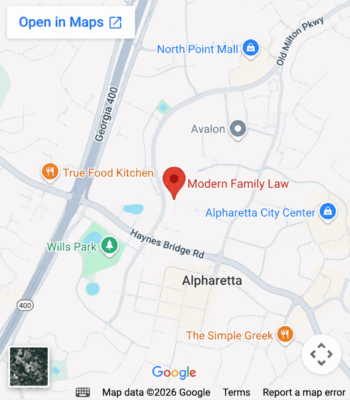
Our Georgia Office Locations
CONTACT US

One of our compassionate team members will review your information and will reach out to you as soon as possible during our regular business hours:
Monday – Friday: 8 AM – 5 PM
Saturday- Sunday: Closed
If you have contacted us during our regular business hours give us a call to speak with us now. If you have contacted us after hours or on the weekend you can expect us to reach out on the morning of our next available business day. Thank you for your interest!
