


Written by MFL Team
Last Updated: July 2026 |
Estimated Reading Time: 15 minutes
Quick Answer
The five emotional stages of divorce are denial, anger, bargaining, depression, and acceptance. Adapted from the Kübler-Ross model of grief, these stages help explain many of the emotions people experience during the end of a marriage. Not everyone experiences every stage or moves through them in the same order.
Divorce is more than a legal proceeding—it is also an emotional and legal journey. While many people are familiar with the five emotional stages of grief, divorce involves two parallel experiences: processing the end of a relationship while navigating the legal steps required to dissolve a marriage. Understanding both can help reduce uncertainty, set realistic expectations, and make the process feel more manageable.
In this comprehensive guide, you’ll learn about the five emotional stages of divorce, the six legal stages of the divorce process, how the experience may differ for spouses and children, practical coping strategies, and answers to some of the most common questions people have as they move through this major life transition.
Key Takeaways
- Divorce involves both an emotional journey and a legal process. Understanding both can help reduce uncertainty and make informed decisions.
- The five emotional stages—shock and denial, anger, bargaining, depression, and acceptance—are common responses to divorce, but they rarely happen in a straight line.
- Most divorces follow six general legal stages, including filing, temporary arrangements, financial disclosures, negotiation, resolution, and final judgment, although the exact process varies by state.
- Every person’s experience is unique. Factors such as children, finances, support systems, and whether the divorce was expected can all influence the healing process.
- Recovery takes time. Building a support system, understanding your legal rights, and focusing on the future can help you move forward with greater confidence.
[/vc_column_text][vc_column_text css=””]
Quick Answer: What Are the Stages of Divorce?
Divorce involves two journeys happening at the same time: an emotional journey as you process the end of your marriage and a legal journey as your divorce moves through the court system. Neither follows a perfectly straight line, and many people move back and forth between stages before reaching acceptance and final resolution.
Understanding the Two Sides of Divorce
| ❤️ Emotional Healing | ⚖️ Legal Divorce Process |
|---|---|
| Healing emotionally after the end of a marriage. | Legally ending a marriage through the court system. |
| Different for every person. | Generally follows a predictable sequence. |
| People often move back and forth between emotions. | Progresses through filing, negotiations, and final judgment. |
| Healing may continue long after the divorce is finalized. | Ends when the court enters the final divorce decree. |
Key Takeaway
Most people experience both the emotional and legal stages of divorce simultaneously. While the legal process generally follows a predictable sequence, emotional healing is rarely linear. Understanding both journeys can help you prepare for what lies ahead.
[/vc_column_text][/vc_column][/vc_row][vc_row][vc_column][vc_row_inner][vc_column_inner][vc_column_text css=””]
Table of Contents
- Understanding the Stages of Divorce
- The Five Emotional Stages of Divorce
- How Long Do the Emotional Stages Last?
- The Six Legal Stages of the Divorce Process
- How Divorce Affects Different People
- Coping With the Emotional Stages of Divorce
- Frequently Asked Questions About the Stages of Divorce
- How Modern Family Law Can Help
[/vc_column_text][/vc_column_inner][/vc_row_inner][/vc_column][/vc_row][vc_row el_id=”understanding-the-stages”][vc_column][vc_row_inner][vc_column_inner][vc_column_text css=””]
Watch: Understanding the Emotional Stages of Divorce
Short on time? This brief video explains the five emotional stages of divorce and complements the guide below. While the video focuses on the emotional journey, this article also covers the legal stages of the divorce process, practical coping strategies, and answers to common questions.[/vc_column_text][vc_column_text css=””]
[/vc_column_text][/vc_column_inner][/vc_row_inner][/vc_column][/vc_row][vc_row el_id=”what-are-the-stages”][vc_column][vc_row_inner][vc_column_inner][vc_column_text css=””]
What Are the Stages of Divorce?
The stages of divorce involve both an emotional journey and a legal process. Emotionally, many people experience feelings similar to the five stages of grief: shock and denial, anger, bargaining, depression, and acceptance. At the same time, they must also navigate the legal steps of ending a marriage, including filing for divorce, exchanging financial information, negotiating a settlement, and receiving a final divorce decree.
Although these emotional and legal journeys often happen simultaneously, they rarely progress at the same pace. Someone may feel emotionally ready to move forward while their divorce case is still working through the court system. Others may complete the legal process long before they have fully processed the emotional impact of the divorce.
Understanding both journeys can help reduce uncertainty and provide realistic expectations about what lies ahead. While every divorce is unique, recognizing the stages many people experience can make the process feel less overwhelming.[/vc_column_text][vc_column_text css=””]
Visual Guide: The Five Emotional Stages of Divorce
While every person’s experience is unique, many people recognize aspects of the emotional stages shown below. These stages are not always experienced in order, and it’s common to move back and forth between them as you process the end of a marriage.
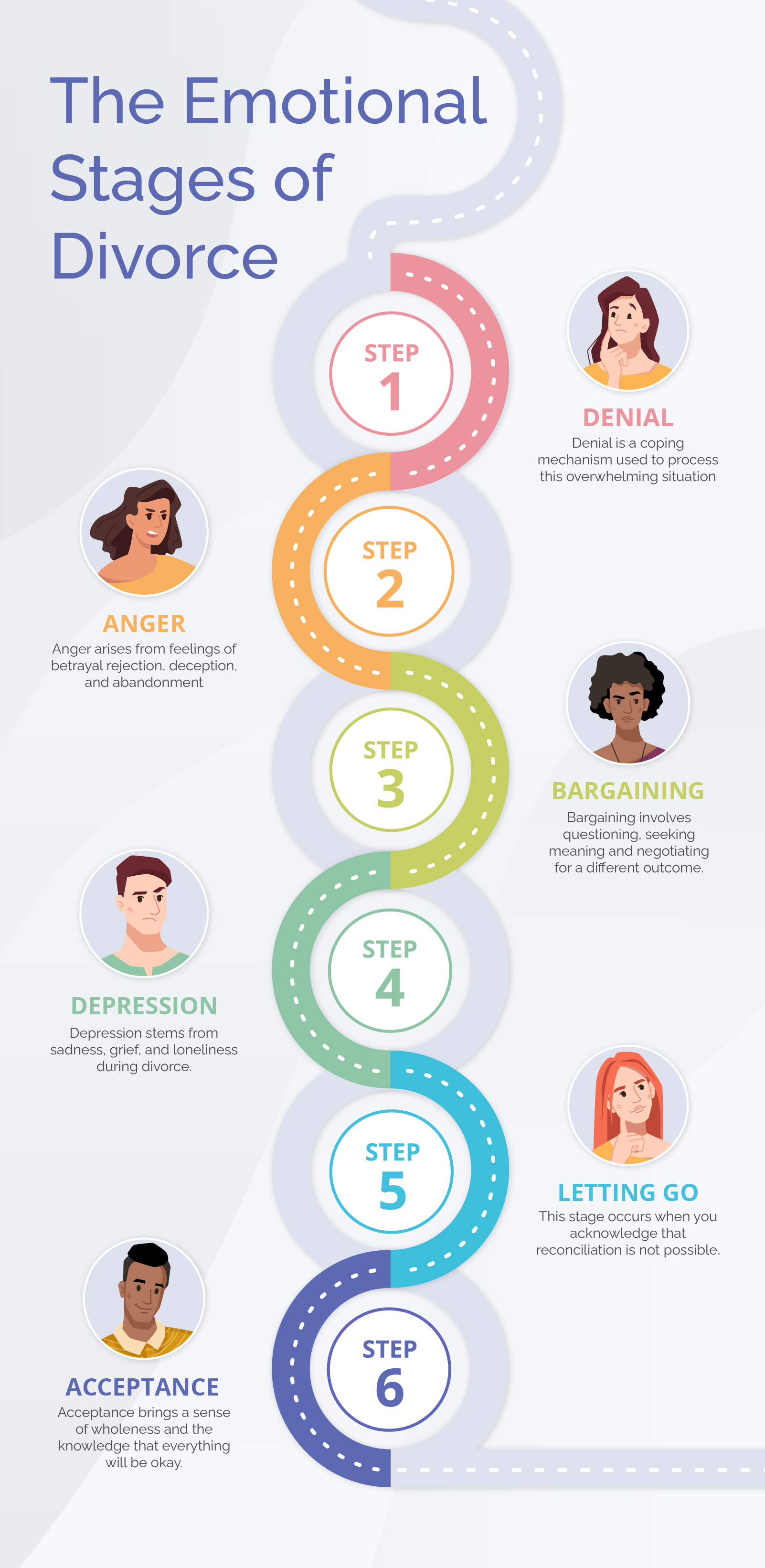
Figure 1. The emotional stages of divorce provide a helpful framework for understanding common emotional responses to the end of a marriage. While many people recognize elements of these stages, emotional healing is rarely linear, and every person’s experience is unique.
Important to Remember
The emotional stages of divorce are designed to explain common emotional reactions—not predict exactly how every person will feel. Some people experience several emotions simultaneously, revisit earlier stages, or move through them in a completely different order. There is no “right” way to heal after divorce.
Now that you’ve seen an overview of the emotional journey, let’s explore each stage in greater detail. Understanding what you may experience during each stage—and how to cope with those emotions—can help make the healing process feel less overwhelming.
[/vc_column_text][/vc_column_inner][/vc_row_inner][/vc_column][/vc_row][vc_row el_id=”emotional-stages”][vc_column][vc_row_inner][vc_column_inner][vc_column_text css=””]
The Five Emotional Stages of Divorce
The five emotional stages of divorce are shock and denial, anger, bargaining, depression, and acceptance. These stages are based on the grief framework developed by psychiatrist Elisabeth Kübler-Ross and can help explain many of the emotions people experience when a marriage ends.
The stages should not be treated as a fixed timeline. You may move back and forth between them, experience several emotions at once, or find that certain stages affect you more strongly than others. Some feelings may also return when a legal milestone occurs, such as filing paperwork, attending mediation, moving out of the family home, or receiving the final divorce decree.
Remember
Shock and denial are often your mind’s way of protecting you from becoming emotionally overwhelmed. You don’t have to have everything figured out today; simply acknowledging what you’re experiencing is an important first step toward healing.
As the initial shock begins to fade, feelings that were temporarily muted may become more intense. For many people, this leads to the next emotional stage: anger.[/vc_column_text][vc_empty_space height=”20px”][/vc_column_inner][/vc_row_inner][/vc_column][/vc_row][vc_row el_id=”stage-2-anger”][vc_column][vc_row_inner][vc_column_inner][vc_column_text css=””]
Keep in Mind
Feeling angry doesn’t mean you’re handling divorce the wrong way. Anger is a common response to loss. The goal isn’t to eliminate it; it’s to express it in healthy ways without allowing it to control important legal or financial decisions.
As anger begins to soften, many people start replaying the relationship in their minds, wondering whether anything could have been done differently. This often leads to the next emotional stage: bargaining.[/vc_column_text][vc_empty_space height=”20px”][/vc_column_inner][/vc_row_inner][/vc_column][/vc_row][vc_row][vc_column][vc_row_inner][vc_column_inner][vc_column_text css=””]
Remember
Looking back is a natural part of healing. Reflecting on the past can help you grow, but healing comes from accepting what cannot be changed and focusing your energy on building the future you want.
As hopes of changing the outcome gradually fade, many people begin confronting the full emotional weight of the loss. This transition often leads to the next stage: depression.[/vc_column_text][vc_empty_space height=”20px”][/vc_column_inner][/vc_row_inner][/vc_column][/vc_row][vc_row][vc_column][vc_row_inner][vc_column_inner][vc_column_text css=””]
As healing continues, many people begin noticing a gradual shift in perspective. Instead of focusing on what has been lost, they start looking toward new opportunities and possibilities. This marks the beginning of the final emotional stage: acceptance.[/vc_column_text][vc_empty_space height=”20px”][/vc_column_inner][/vc_row_inner][/vc_column][/vc_row][vc_row][vc_column][vc_row_inner][vc_column_inner][vc_column_text css=””]
Although emotional healing is deeply personal, the legal side of divorce generally follows a more predictable path. Understanding the legal stages of divorce can help you prepare for the practical decisions that lie ahead and reduce uncertainty throughout the process.
[/vc_column_text][vc_empty_space height=”20px”][/vc_column_inner][/vc_row_inner][/vc_column][/vc_row][vc_row el_id=”how-long-do-the-stages-last”][vc_column][vc_row_inner][vc_column_inner][vc_column_text css=””]
How Long Do the Emotional Stages of Divorce Last?
There is no universal timeline for healing after divorce. Some people move through the emotional stages in a matter of months, while others revisit certain emotions over several years. The length of each stage depends on many factors, including the length of the marriage, whether children are involved, the circumstances surrounding the divorce, and the support available throughout the process.
It’s also important to remember that emotional healing is rarely a straight line. You may feel like you’ve reached acceptance only to experience anger or sadness again after signing final paperwork, attending a child’s graduation, or reaching another significant milestone. This is a normal part of the healing process.
What Influences the Healing Process?
Length of the Marriage
Longer marriages often involve more emotional adjustment because of shared routines, finances, friendships, and family relationships.
Children
Co-parenting responsibilities may continue long after the divorce is finalized and can affect the healing process.
How the Divorce Happened
An unexpected divorce, infidelity, or high-conflict separation may create additional emotional challenges.
Support System
Friends, family, therapists, and experienced legal professionals can all help make the transition more manageable.
A Realistic View of Healing
While everyone’s experience is different, emotional recovery often looks more like a series of waves than a straight line.
Early Months
Shock, denial, anger, and uncertainty are often most intense.
As the Divorce Progresses
Many people begin moving between bargaining, sadness, and moments of acceptance.
After the Divorce Is Finalized
Healing continues. While difficult emotions may still appear, they usually become less frequent and less overwhelming over time.
Healing Isn’t Linear
Many people expect emotional healing to happen one stage at a time. In reality, it’s common to revisit earlier emotions—even after you’ve begun feeling hopeful again. A holiday, your child’s birthday, signing the final divorce decree, or seeing your former spouse can temporarily bring back feelings of grief. This doesn’t mean you’ve started over. It simply means healing is still taking place.
While emotional healing follows its own unique path, the legal side of divorce generally follows a more structured process. Understanding what happens next can reduce uncertainty and help you prepare for each step with greater confidence.
[/vc_column_text][vc_empty_space height=”20px”][/vc_column_inner][/vc_row_inner][/vc_column][/vc_row][vc_row el_id=”legal-stages”][vc_column][vc_row_inner][vc_column_inner][vc_column_text css=””]
The Six Legal Stages of the Divorce Process
The legal stages of divorce generally include starting the case, establishing temporary arrangements, exchanging information, negotiating unresolved issues, preparing for trial when necessary, and obtaining a final judgment. The exact process varies by state, local court rules, and whether the spouses agree on major issues.
Not every divorce goes through every stage. Couples who reach a complete agreement may avoid temporary hearings, extensive discovery, or trial. Contested cases involving property, support, or parenting disputes usually require additional steps before the court can finalize the divorce.
The Divorce Process at a Glance
Although the names and requirements differ by state, most divorce cases move through some version of these six legal stages.
Stage 1
Start the Case
Stage 2
Temporary Arrangements
Stage 3
Disclosures & Discovery
Stage 4
Negotiation & Mediation
Stage 5
Trial or Resolution
Stage 6
Final Judgment
The Exact Process Depends on Your State and Case
Divorce is governed primarily by state law, and individual courts may use different terms, forms, deadlines, and procedures. Some cases skip several stages, while complex or contested divorces may require additional hearings, experts, or post-judgment work. An attorney familiar with the court handling your case can explain which steps are likely to apply.
General process sources: California Courts Self-Help Guide, Colorado Judicial Branch, and TexasLawHelp. Procedures and terminology vary by jurisdiction.
[/vc_column_text][vc_empty_space height=”20px”][/vc_column_inner][/vc_row_inner][/vc_column][/vc_row][vc_row][vc_column][vc_row_inner][vc_column_inner][vc_column_text css=””]
How Divorce Affects Different People
No two people experience divorce in exactly the same way. Emotional reactions can be influenced by whether someone initiated the divorce, how suddenly the marriage ended, their financial circumstances, their support system, and whether children are involved.
Gender may also shape how some people seek support or express grief, but individual experiences vary widely. The stages of divorce should never be treated as a rigid formula for how women, men, children, or either spouse are expected to feel.
Factors That Can Shape the Divorce Experience
How someone responds to divorce often depends more on their circumstances than on any single demographic characteristic.
Who Initiated the Divorce
The initiating spouse may begin grieving before the legal case starts, while the other spouse may experience the news as a sudden shock.
Financial Stability
Concerns about housing, income, support, debt, and retirement can intensify uncertainty during the emotional stages.
Children and Co-Parenting
Parents may be processing their own grief while helping children adjust and establishing new family routines.
Support System
Trusted friends, family members, counselors, support groups, and legal professionals can make the transition feel less isolating.
The Stages of Divorce for Women
Women may experience any combination of shock, anger, bargaining, sadness, and acceptance. Some may also face practical concerns involving household income, caregiving responsibilities, health insurance, retirement savings, or returning to the workforce.
At the same time, many women enter divorce with strong professional identities, independent finances, and established support networks. There is no single emotional pattern that applies to every woman. The most helpful approach is to focus on the individual’s circumstances rather than assume that gender determines the experience.
Practical Focus
Understanding household finances, credit, property, insurance, support, and retirement accounts can provide greater confidence and independence during the divorce process.
The Stages of Divorce for Men
Men experience the same broad range of grief responses, although some may feel pressure to hide sadness, fear, or loneliness. Anger, withdrawal, overworking, or avoiding conversations about the divorce can sometimes mask deeper feelings of loss.
Divorce may also affect a man’s daily relationship with his children, living arrangements, social connections, and sense of identity. Creating a dependable support system and addressing emotions directly can make the adjustment healthier and more manageable.
Practical Focus
Maintaining meaningful friendships, staying actively involved in children’s lives, and seeking support when needed can reduce isolation during and after divorce.
How Children Experience Divorce
Children may also grieve the changes that accompany divorce, but they do not necessarily experience the same stages as adults. Their reactions often depend on age, personality, family conflict, changes in routine, and how parents communicate with them.
Younger children may worry about where they will live or whether they caused the divorce. School-age children may experience sadness, anger, divided loyalty, or difficulty concentrating. Teenagers may become withdrawn, more independent, or openly frustrated with one or both parents.
Supporting Children at Different Ages
Children need age-appropriate information, reassurance, and permission to maintain healthy relationships with both parents whenever it is safe to do so.
Young Children
Use simple explanations, repeat that the divorce is not their fault, and maintain predictable routines.
School-Age Children
Encourage questions, acknowledge difficult emotions, and keep teachers informed when additional support may be helpful.
Teenagers
Respect their growing independence while maintaining boundaries, open communication, and consistent parental involvement.
Keep Children Out of Adult Conflict
Avoid asking children to carry messages, choose sides, gather information, or provide emotional support to a parent. Children should be allowed to love both parents without feeling responsible for the divorce.
The Spouse Who Initiated the Divorce
The spouse who initiates divorce may appear to move through the emotional stages more quickly because they may have been considering the decision for months or even years before discussing it openly.
Initiating the divorce does not mean that person feels no grief. They may experience guilt, uncertainty, sadness, fear of regret, or concern about how the decision will affect children and extended family. Relief and grief can also exist at the same time.
Remember
Being emotionally further along does not mean the other spouse should be expected to adjust immediately. Patience, clear boundaries, and respectful communication can reduce unnecessary conflict.
The Spouse Who Did Not Expect the Divorce
A spouse who did not anticipate the divorce may enter the process in shock while the initiating spouse has already spent considerable time thinking about the decision. This difference in emotional timing can make conversations and negotiations especially difficult.
The surprised spouse may need time to understand what is happening, obtain legal information, gather financial records, and develop a support system. Although some decisions require prompt attention, not every issue must be solved immediately.
Remember
Feeling unprepared does not mean you are powerless. Learning about your legal rights, finances, and available support can help restore a sense of stability and control.
The Emotional Timelines May Not Match
One spouse may be approaching acceptance while the other is still experiencing shock, anger, or bargaining. Recognizing that difference can help explain why communication feels difficult and why neutral professionals, structured negotiation, or mediation may be useful.
Coping With the Emotional Stages of Divorce
Healthy coping does not require you to ignore grief or remain positive at every moment. It means creating enough stability to process difficult emotions while continuing to care for your health, responsibilities, children, and future.
The strategies that help most may change as you move through the emotional and legal stages. During shock, you may need information and immediate support. During anger, you may need healthy boundaries. During sadness, maintaining connection and daily routines may become especially important.
Building a Healthy Divorce Support Plan
Divorce affects emotional health, family life, finances, and legal rights. Building support in each area can make the transition more manageable.
Emotional Support
Identify trusted people who can listen without escalating conflict or pressuring you to make decisions.
Professional Support
A counselor, therapist, financial professional, mediator, or attorney can provide guidance within their area of expertise.
Daily Stability
Regular sleep, meals, movement, work, parenting routines, and time outdoors can provide structure during uncertainty.
Reliable Information
Learn about the divorce process from trustworthy sources rather than relying on assumptions, social media, or another person’s case.
Focus on What You Can Control
You may not be able to control your former spouse’s decisions, the court’s schedule, or every emotion that arises. You can control how you communicate, which professionals you consult, how you care for yourself, and whether your choices support your long-term goals.
Avoid Making Major Decisions in the Heat of Emotion
Anger, fear, guilt, and exhaustion can affect judgment. Before agreeing to significant financial, parenting, or property terms, take time to understand the consequences and obtain appropriate professional guidance.
Create Boundaries Around Communication
When direct communication repeatedly turns into conflict, consider using written communication, scheduled conversations, a parenting application, attorneys, or a mediator. Clear boundaries can help separate legal and parenting discussions from unresolved marital arguments.
Take the Process One Step at a Time
Divorce can feel overwhelming when viewed as one enormous problem. Breaking it into smaller tasks—gathering one set of documents, preparing one budget, or addressing one parenting issue—can make the process feel more manageable.
When Additional Support May Be Helpful
Consider speaking with a licensed mental health professional if difficult emotions consistently interfere with sleep, work, parenting, relationships, or your ability to care for yourself. Legal professionals can explain the divorce process, but emotional and mental health concerns should be addressed by an appropriately qualified provider.
Remember
Moving forward does not require you to feel fully healed before taking the next practical step. Emotional progress and legal progress often occur at different speeds, and both can happen gradually.
Frequently Asked Questions About the Stages of Divorce
The following answers address common questions about the emotional and legal stages of divorce. Because divorce laws and procedures vary, legal information should be treated as a general overview rather than advice for a specific case.
What are the five emotional stages of divorce?
The five commonly recognized emotional stages are shock and denial, anger, bargaining, depression, and acceptance. They provide a framework for understanding grief but do not predict exactly how every person will experience divorce.
Do the stages of divorce happen in order?
Not usually. People may skip a stage, experience several emotions at once, or return to anger, bargaining, or sadness after periods of acceptance. Emotional healing is rarely linear.
How long do the emotional stages of divorce last?
There is no universal timeline. Healing may take months or longer and can be affected by the length of the marriage, conflict, children, financial stress, whether the divorce was expected, and the support available.
What are the legal stages of divorce?
The legal process generally includes filing and service, temporary arrangements when needed, financial disclosures and discovery, negotiation or mediation, trial or final resolution, and entry of a final divorce judgment. The exact steps vary by state and case.
Is the divorce process different for women and men?
The legal process does not generally assign different steps based on gender. Emotional and practical experiences may differ depending on finances, caregiving, parenting, support systems, and individual circumstances, but no single pattern applies to every woman or man.
Does the spouse who initiates divorce heal faster?
The initiating spouse may appear further along because they may have started processing the end of the marriage before discussing divorce. They can still experience grief, guilt, uncertainty, and fear even when the decision was theirs.
How can parents help children cope with divorce?
Parents can provide age-appropriate explanations, reassure children that the divorce is not their fault, maintain reliable routines, avoid exposing them to adult conflict, and support healthy relationships with both parents whenever it is safe.
Can the legal divorce be finished before emotional healing is complete?
Yes. A court can legally finalize a divorce while one or both spouses are still processing grief. Emotional healing often continues after the final decree and may be affected by later milestones, parenting issues, or financial changes.
Moving Forward Through the Stages of Divorce
Divorce involves more than one path. The emotional stages describe the grief, adjustment, and healing many people experience, while the legal stages create the framework for formally ending the marriage and resolving practical issues.
Neither journey will look exactly the same for every family. You may move quickly through one legal stage while remaining in the same emotional stage for months. You may also revisit difficult feelings after believing you had already reached acceptance.
The Bottom Line
There is no perfect way to move through divorce. Understanding your emotions, learning what to expect legally, building a dependable support system, and making decisions with your long-term future in mind can help create a more manageable path forward.
[/vc_column_text][vc_empty_space height=”20px”][/vc_column_inner][/vc_row_inner][/vc_column][/vc_row][vc_row][vc_column][vc_column_text css=””]
How Modern Family Law Can Help
Ending a marriage is rarely just a legal process. It can affect your family, finances, home, future plans, and emotional well-being all at the same time. While every divorce is different, experienced legal guidance can help reduce uncertainty and give you greater confidence when making important decisions.
At Modern Family Law, we understand that divorce is more than a case file—it is a major life transition. Our attorneys help individuals and families navigate a wide range of family law matters, from straightforward uncontested divorces to complex cases involving children, property division, spousal maintenance, financial disputes, and high-conflict parenting concerns.
Throughout every stage, our focus remains the same: helping clients understand their options, protect what matters most, and prepare for the life they want to build next.
Why Families Choose Modern Family Law
Experienced Family Law Attorneys
Our work is focused on family law, giving our attorneys experience across divorce, custody, support, property division, mediation, and other family-related legal matters.
Compassionate, Practical Guidance
Every family is different. We take the time to understand your priorities and provide clear, practical guidance based on your circumstances and long-term goals.
Focused on Your Future
We help clients address today’s legal challenges while building a stronger foundation for tomorrow, whether that means protecting relationships with children, preserving financial stability, or preparing for a fresh start.
Starting Over Does Not Mean Starting Alone
Although divorce can feel overwhelming, it can also mark the beginning of a healthier and more stable future. Whether you are considering divorce, navigating an active case, adjusting to a new parenting arrangement, or facing another family law matter, Modern Family Law is committed to helping you move forward with clarity, confidence, and experienced support.
Divorce changes your life, but it does not define it.
Understanding both the emotional and legal stages of divorce can help you move through this difficult chapter with greater confidence. When you are ready to take the next step, having the right legal team beside you can make a meaningful difference.
Additional Articles You May Find Helpful


Can My Spouse Claim Equity in a House I Owned Before Marriage?
- November 8, 2026


Gray Divorce: A Comprehensive Guide to Divorce After 50
- August 24, 2026

What Is Alimony? A Guide to Spousal Support
- August 3, 2026

How Long Does a Divorce Take? A Step-by-Step Timeline
- August 3, 2026
